Powered by Women First Digital

Contraceptive Implant

Contraceptive Implant

What is the contraceptive Implant?

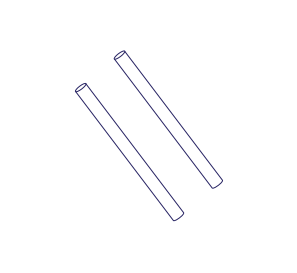
The Contraceptive Implant, also known as a Birth Control implant is a long-term, reversible, hormonal contraceptive in the form of tiny thin rods that are inserted into the upper arm. These rods release a hormone that prevents pregnancy for 3 to 5 years.

How big is the Contraceptive Implant?

The Contraceptive Implant comes in small, flexible plastic rods or capsules (the size of a matchstick) inserted under the upper arm’s skin. A woman can not initiate or terminate the usage of a contraceptive implant on her own. Implants can only be inserted or removed by a trained healthcare provider.

How does a Contraceptive Implant work?

Once inserted, the Contraceptive Implant releases the hormone progestin, similar to the progesterone that is naturally found in a woman’s body. It works by:

  1. Preventing ovaries from releasing eggs
  2. Thickening cervical mucus to block sperm from getting to the egg [1].

How long does the contraceptive Implant last?

The Contraceptive Implant can prevent pregnancy for up to five years, and there are different types:

  1. Implanon, or Nexplanon, is a one-rod containing etonogestrel. It’s effective for three years, although studies have shown that it can last up to five years (can be seen on an X-ray).
  2. Jadelle is two rods containing levonorgestrel. It’s effective for up to five years.
  3. Levoplant – also known as Sino-implant – comes in the form of two rods containing levonorgestrel. It’s effective for three years [2].

How effective is the Contraceptive Implant?

It provides 99.9% protection against pregnancy and other associated risks, including ectopic pregnancy. Some medications can however reduce the implant’s effectiveness. If you are considering a Contraceptive implant, remember to mention any medication you are taking to your healthcare provider.

What does the Contraceptive Implant look like?

Contraception Quiz

Need more help choosing your ideal method? Take our contraceptive quiz.

Answer a few simple questions, and based on the responses, we will recommend contraceptive options that could work for you.

Take the quiz
External Condom

Compare with similar Contraceptive Methods

Are you wondering if condoms are better than daily pills? Or if you should opt for a birth control implant? We're here to assist you in making this decision. You can select up to 5 contraceptive methods and compare them side by side to weigh the pros and cons of each.

Give a try to our Contraceptive Tool

In the example below, you'll find similar methods to the one you're currently reading about. Feel free to click on any that catch your interest or revisit our Contraceptive Methods page

Our Monthly Top Articles

Can You Get Pregnant If Semen Leaks Out After Sex?

Can You Get Pregnant If Semen Leaks Out After Sex?

The short answer is yes; it is possible to get pregnant if the semen gets inside or near your vagina. The longer answer is that there are many situations in which semen leaking out could happen, bu...

How Long Can You Leave a Tampon In?

How Long Can You Leave a Tampon In?

Using a tampon for the first time might feel daunting. There is a lot of information and misinformation on how to use them and the potential risks, which can make it hard to know what is true. If y...

Can You Get Pregnant If Semen Leaks Out After Sex?

Can You Get Pregnant If Semen Leaks Out After Sex?

The short answer is yes; it is possible to get pregnant if the semen gets inside or near your vagina. The longer answer is that there are many situations in which semen leaking out could happen, bu...

How Long Can You Leave a Tampon In?

How Long Can You Leave a Tampon In?

Using a tampon for the first time might feel daunting. There is a lot of information and misinformation on how to use them and the potential risks, which can make it hard to know what is true. If y...

What Contraception Stories Tell Us About Real Choice

What Contraception Stories Tell Us About Real Choice

For some people, getting contraception is as easy as walking into a pharmacy or a healthcare facility. For others, it means navigating costs, stigma, misinformation, limited choices, shame, cultura...