
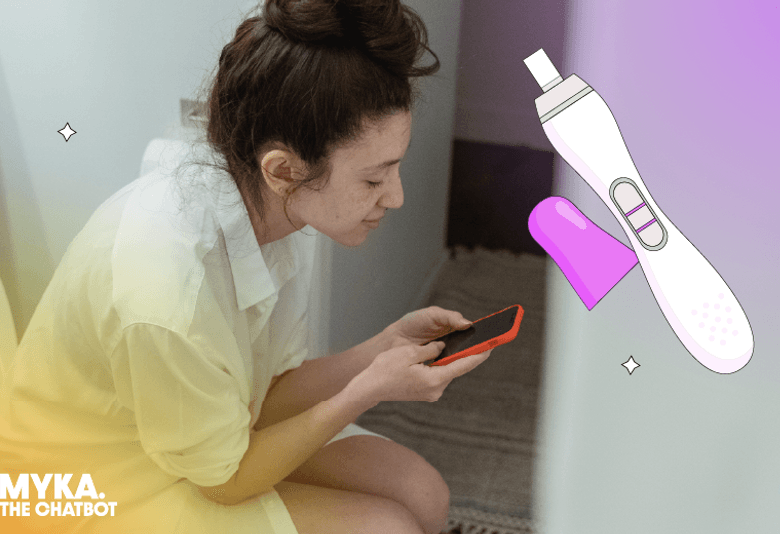
You cannot know for sure if you are pregnant without a pregnancy test. A missed period, nausea, breast tenderness, tiredness, and frequent urination can be early signs of pregnancy, they can also happen because of premenstrual syndrome (PMS), stress, hormonal changes, or other health conditions.
If your period is late or you’re a person capable of being pregnant and had unprotected sex, taking a pregnancy test is the most reliable next step.
Early Signs That You Might Be Pregnant
There are common pregnancy symptoms that appear at the earliest stage (the first three months).
Pregnancy Symptoms
- Delayed menstruation
- Nausea with or without vomiting
- Frequent urination
- Fatigue
- Breast tenderness
Other less common symptoms include
- Mood swings
- Abdominal inflammation
- Cramps
- Mild spotting
These signs can vary from person to person and do not always indicate pregnancy. For this reason, the only way to confirm a pregnancy is through a pregnancy test or with help from a healthcare professional. Some people experience very few or no symptoms in early pregnancy.
How Soon Can Pregnancy Symptoms Start?
The first signs may appear around the time of a missed period, but timing varies from one person to another. The absence of the menstrual period is usually the first noticeable sign, but other signs may appear even earlier. Take our interactive online pregnancy quiz to help you figure out your probability of being pregnant.
Pregnancy symptoms can also be caused by hormonal changes, stress, or other health conditions such as premenstrual syndrome (PMS), which is why testing is more reliable than tracking symptoms.
It is important not to rush to conclusions before taking a pregnancy test or consulting a doctor.
Body Signs That May Suggest Pregnancy But Cannot Confirm It
Although the best way to confirm a pregnancy is with a urine or blood test, some alternative methods may help you identify early signs of pregnancy.
Tracking Basal Body Temperature (BBT)
Basal body temperature is the lowest temperature your body reaches at rest. During the menstrual cycle, this temperature usually increases slightly after ovulation and remains elevated if you are pregnant.
A sustained temperature rise may suggest ovulation or hormonal changes, but it cannot confirm pregnancy. Tracking basal body temperature is also only useful if you were already tracking BBT daily before pregnancy was suspected.
Observing Cervical Mucus
During the menstrual cycle, cervical mucus changes consistency depending on the phase you are in. In pregnancy, some people notice that cervical mucus becomes thicker, abundant, and with a slightly milky consistency.
During the early stages of pregnancy, hormonal levels change; an increase in estrogen will prompt the cervix to produce more cervical mucus. However, changes in cervical mucus alone are not a reliable indicator of pregnancy.
Cervical mucus changes can happen for many reasons, including ovulation, hormonal changes, infections, or pregnancy, so it should not be used to confirm pregnancy.
Noticing Several Symptoms Together
In addition to a missed period, other signs can also indicate pregnancy. These include
- Breast tenderness
- Nausea
- Food cravings
- Dizziness
- Excessive fatigue
- Mood changes.
If you experience several of these symptoms together, it could be a sign to test for pregnancy.
Although these changes in the body can help detect possible pregnancy signs, it is important to confirm pregnancy through a home pregnancy test, blood test, ultrasound, or consultation with a healthcare professional
When Should You Take a Pregnancy Test?
Most pregnancy tests can be taken from the first day of a missed period, or at least 21 days after unprotected sex if the expected period date is unknown.
Pregnancy tests work by detecting an elevated amount of a hormone known as human chorionic gonadotropin (hCG) in urine or blood. This hormone builds up over time, doubling every few days in the first week of pregnancy. At home pregnancy tests may differ in how early they can detect pregnancy. In some cases, they can detect pregnancy as early as 10 days after conception.
What If Your Pregnancy Test Is Negative but Your Period Is Late?
If you take a test before a missed period and it comes out negative, take another test after a few days for accurate results. If your test comes out negative even after a missed period, you can either retest or speak with a healthcare provider for assistance.
Your pregnancy test might be negative due to the following:
- Testing too early
- Stress
- Hormonal changes
- Illness
- Irregular cycles
- Contraceptive methods
These can affect pregnancy test results or your periods.
If you suspect you are pregnant, it is crucial to get a pregnancy test. Early confirmation will allow you to make informed decisions and explore your pregnancy options, including parenting, adoption, or abortion, depending on what is available and safe where you live.
Can you know if you are pregnant without a pregnancy test?
No, symptoms can suggest pregnancy, but they cannot confirm it. A pregnancy test or healthcare provider is needed to know for sure.
What are the earliest signs of pregnancy?
A missed period, nausea, breast tenderness, tiredness, frequent urination, mood changes, bloating, cramps, or light spotting may happen, but they are not proof of pregnancy.
How soon can I take a pregnancy test?
Most tests can be taken from the first day of a missed period. If you do not know when your period is due, test at least 21 days after unprotected sex.
Can cervical mucus tell me if I am pregnant?
No. Cervical mucus may change during pregnancy, but it also changes during the menstrual cycle and for other reasons, so it cannot confirm pregnancy.
Can basal body temperature confirm pregnancy?
No. BBT may show hormonal patterns if you already track it daily, but it cannot confirm pregnancy. A test is still needed.
What should I do if I think I am pregnant?
Take a pregnancy test, confirm the result, and explore your options. If you do not want to be pregnant, seek reliable information and support as early as possible.
SOURCES
- Basal body temperature: Detecting ovulation and early pregnancy – https://www.babycenter.com/getting-pregnant/ovulation/chart-basal-body-temperature-and-cervical-mucus_3195
- Cervical mucus changes: Are they an early sign of pregnancy? – https://flo.health/getting-pregnant/trying-to-conceive/signs-of-pregnancy/mucus-sign-of-pregnancy
- Signs and Symptoms of A Pregnancy https://www.nhs.uk/pregnancy/trying-for-a-baby/signs-and-symptoms-of-pregnancy/
- Doing a Pregnancy Test https://www.nhs.uk/pregnancy/trying-for-a-baby/doing-a-pregnancy-test/?utm_source=chatgpt.com
- Pregnancy Tests https://my.clevelandclinic.org/health/diagnostics/9703-pregnancy-tests